Inside the Evolution: How Borescope Testing Became Essential in Modern Inspections
April 17, 2026
Borescope testing has become one of the most valuable tools in non-destructive testing (NDT), allowing inspectors to examine hard-to-reach areas without dismantling equipment. From its early beginnings to today’s advanced digital systems, this technology has transformed how industries approach inspection and maintenance.
Understanding the history of borescope testing reveals how innovation has made inspections safer, faster, and more precise.
What Is Borescope Testing?
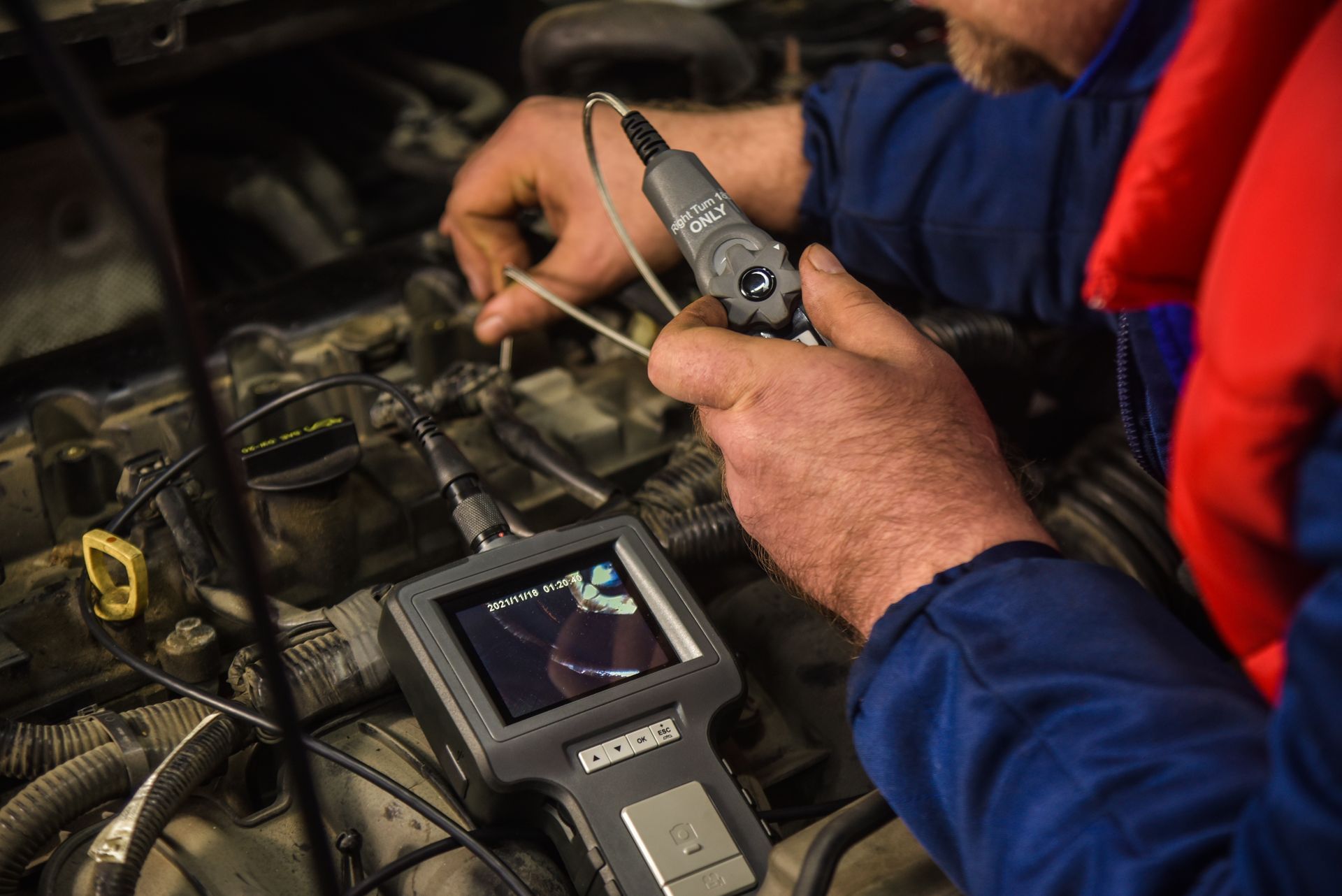
Borescope testing is a visual inspection method that uses a flexible or rigid tube equipped with a camera and light source to examine internal components.
It is commonly used to inspect:
- Engines and turbines
- Pipelines and welds
- Industrial machinery
- Structural components
This method allows inspectors to detect damage without disassembling equipment.
Early Origins of Borescope Technology
The concept of borescope inspection dates back to the early 20th century, when basic optical devices were developed to inspect internal spaces.
Early borescopes:
- Used simple lenses and mirrors
- Relied on external light sources
- Provided limited visibility and clarity
These early tools were primarily used in mechanical and industrial applications where internal access was restricted.
Advancements in Optical and Fiber Technology
As technology progressed, borescope testing improved significantly with the introduction of fiber optics.
Fiber optic borescopes allowed for:
- Greater flexibility
- Improved light transmission
- Enhanced image quality
This advancement made it possible to inspect more complex and confined areas with greater accuracy.
The Shift to Video Borescopes
The development of video borescopes marked a major turning point in inspection technology.
With integrated cameras and digital displays, inspectors gained:
- Real-time video viewing
- The ability to record and document inspections
- Improved accuracy in identifying defects
This transition greatly increased the efficiency and reliability of NDT inspections.
Modern Borescope Technology
Today’s borescope inspection tools are highly advanced and widely used across multiple industries.
Modern systems offer:
- High-definition imaging
- Articulating probe control
- Digital recording and analysis
- Enhanced lighting and clarity
These features allow inspectors to perform detailed evaluations with minimal disruption.
Industries That Rely on Borescope Testing
Borescope testing is now a critical part of many industries.
Common applications include:
- Aerospace and aviation inspections
- Power generation equipment
- Manufacturing and industrial systems
- Oil and gas infrastructure
Its ability to provide internal visibility without disassembly makes it invaluable.
Why Borescope Testing Is Essential Today
Modern industries demand efficient and accurate inspection methods. Borescope testing meets these needs by providing detailed insights while minimizing downtime.
Key benefits include:
- Reduced need for equipment disassembly
- Faster inspection processes
- Improved safety for inspectors
- Early detection of internal damage
These advantages make it a key component of modern NDT services.
From Simple Tools to Advanced Inspection Systems
The evolution of borescope testing reflects the broader advancements in technology and engineering. What began as a basic optical tool has become a sophisticated inspection method used across critical industries.
Steel City NDT provides advanced borescope inspection services that help identify hidden issues, improve safety, and support the long-term performance of essential systems.
What is borescope testing?
Borescope testing is a visual inspection method used to examine internal areas without disassembly.
When was borescope technology first developed?
Early versions were developed in the early 20th century using basic optical tools.
What is a video borescope?
A video borescope uses a camera to provide real-time visual inspection and recording.
What industries use borescope testing?
Aerospace, manufacturing, energy, and infrastructure industries commonly use it.
Why is borescope testing important?
It allows for efficient, non-invasive inspections and early detection of internal issues.
You might also like