Chasing Infrared: The Fascinating History of Thermal Inspection
May 15, 2026
Today, thermal inspection technology is used across countless industries to detect hidden problems quickly and safely. From electrical systems and manufacturing equipment to infrastructure and predictive maintenance, infrared imaging has become one of the most valuable non-destructive testing tools available.
But the science behind thermal imaging has a surprisingly fascinating history.
Long before modern infrared cameras existed, scientists were already exploring invisible forms of heat and radiation. Over time, those discoveries evolved into advanced infrared inspection systems capable of detecting issues the human eye could never see.
In 2026, thermal imaging is one of the most recognizable forms of non-destructive testing (NDT), but its origins trace back more than two centuries.
The Discovery of Infrared Light
The story of infrared technology begins in 1800 with astronomer William Herschel.
While studying sunlight using prisms, Herschel discovered that temperatures increased beyond the visible red portion of the light spectrum. This invisible heat radiation eventually became known as infrared radiation.
That discovery changed how scientists understood:
- heat transfer
- electromagnetic energy
- invisible radiation
Even though the technology to visualize infrared did not yet exist, the scientific foundation had been established.
Early Thermal Detection Technology
In the early years, infrared detection technology remained extremely limited.
Scientists could measure heat differences, but they could not yet create modern thermal images.
During the late 1800s and early 1900s, advancements in sensors and radiation detection gradually improved the ability to identify temperature variations.
These developments laid the groundwork for what would eventually become modern thermal imaging inspection systems.
Military Development Accelerated Infrared Technology
One of the biggest turning points for infrared inspection technology came during the 20th century.
Military research significantly accelerated advancements in:
- heat detection
- night vision
- infrared sensing
- surveillance technology
During World War II and the Cold War era, infrared systems became increasingly valuable for:
- navigation
- target detection
- nighttime visibility
As sensor technology improved, thermal imaging eventually expanded beyond military use into industrial and commercial applications.
How Thermal Cameras Changed Industrial Inspections
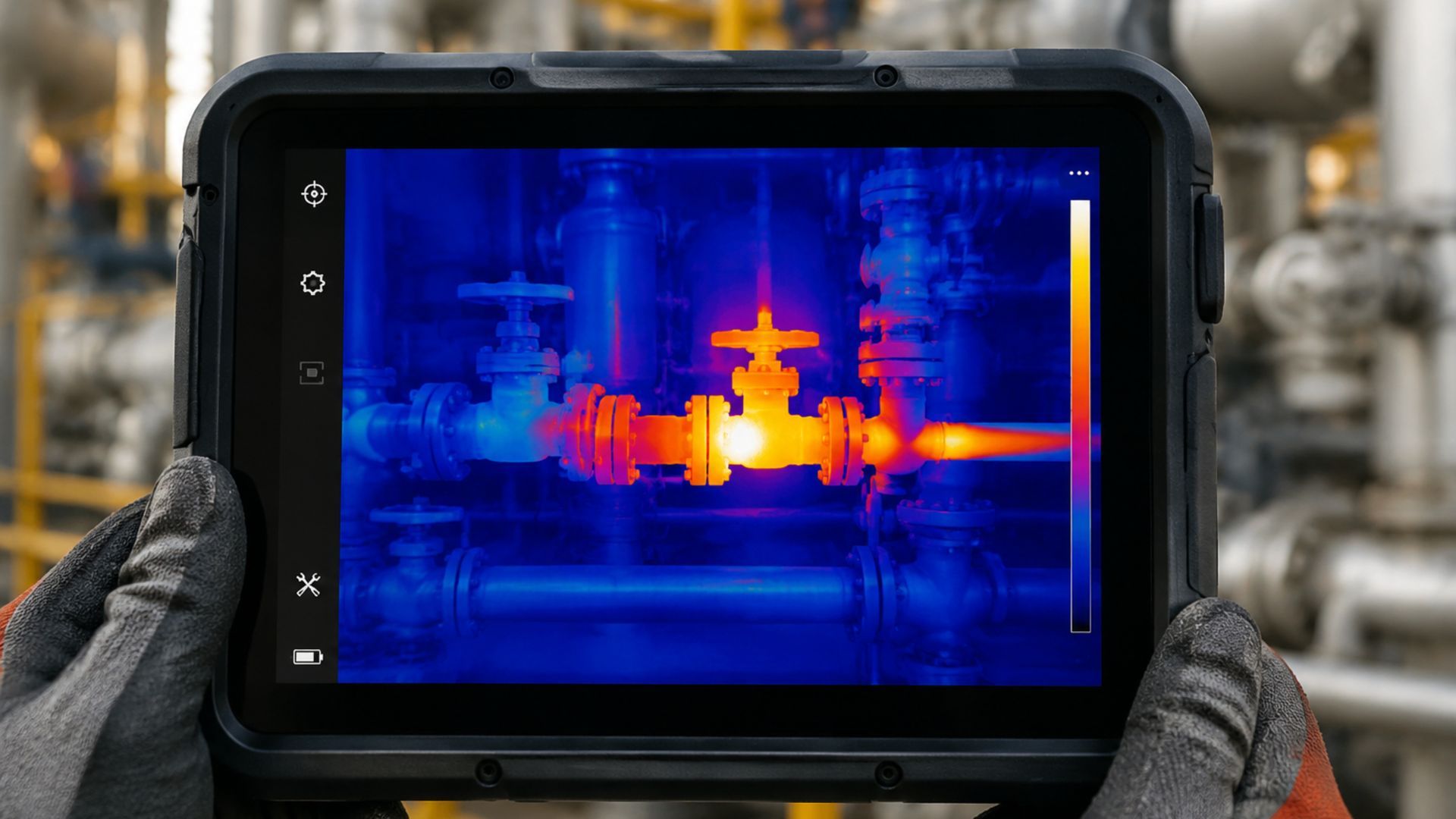
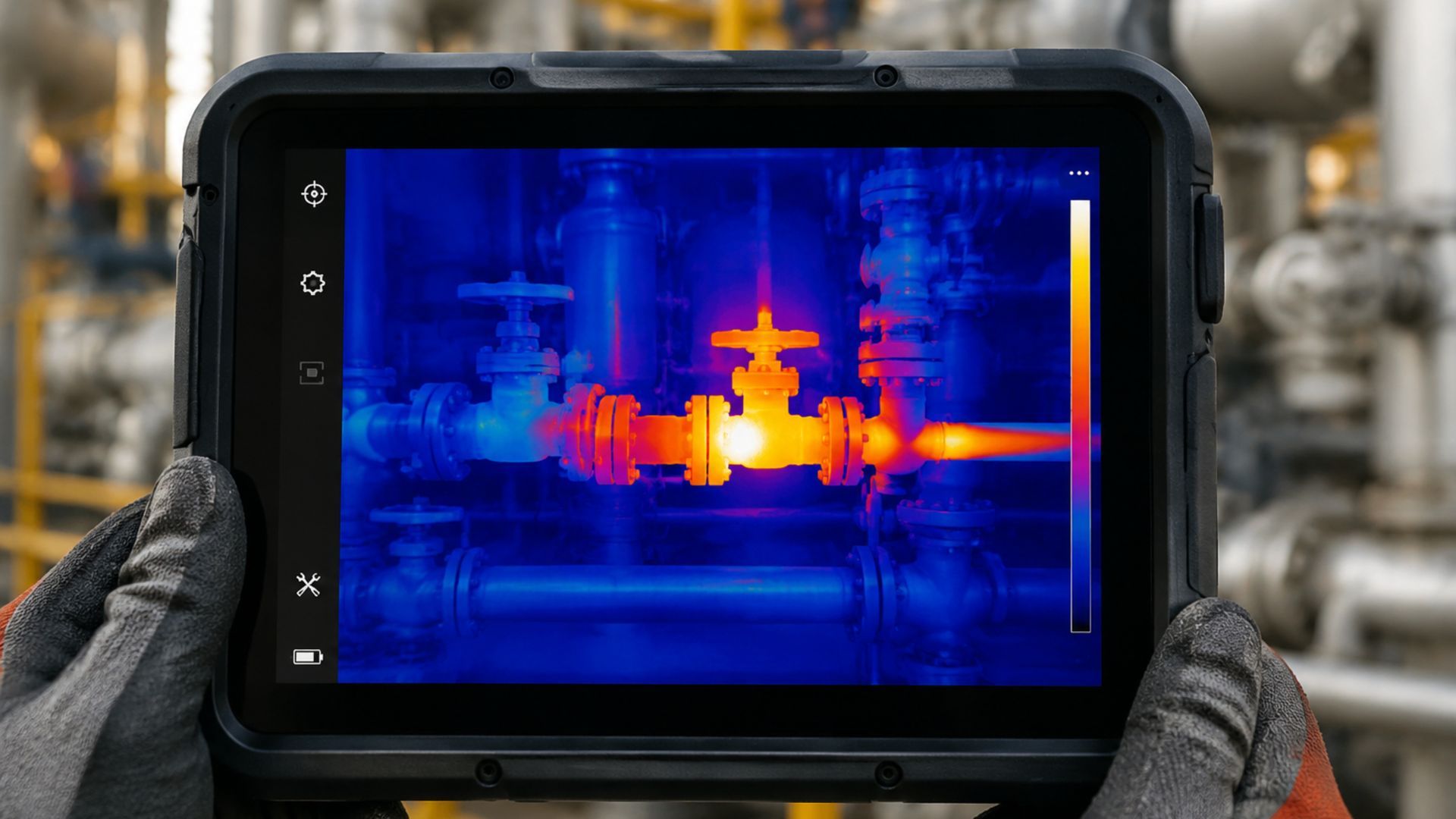
Modern thermal inspection cameras transformed how industries identify hidden issues.
Unlike visual inspections alone, infrared systems allow inspectors to detect:
- abnormal heat patterns
- electrical hotspots
- insulation failures
- mechanical friction
- moisture intrusion
- energy loss
This made inspections:
- safer
- faster
- more accurate
- less invasive
For many industries, thermal imaging became a major advancement in preventive maintenance and predictive diagnostics.
Why Thermal Inspection Fits Perfectly into NDT
One reason infrared thermography became so valuable is because it aligns perfectly with the principles of non-destructive testing.
Thermal inspection allows technicians to evaluate systems:
- without dismantling equipment
- without damaging materials
- while systems remain operational
This creates major advantages for industries focused on:
- safety
- efficiency
- uptime
- cost reduction
Today, thermal imaging is commonly used alongside other NDT methods to improve inspection accuracy.
Industries That Rely on Thermal Inspection Today
Modern infrared inspection services are used across a wide range of industries.
Common applications include:
- electrical inspections
- manufacturing
- building diagnostics
- infrastructure evaluation
- energy systems
- industrial maintenance
Thermal imaging is especially valuable because many problems generate abnormal heat signatures before visible failure occurs.
That early detection capability helps reduce downtime and improve safety.
Why Predictive Maintenance Is Growing in 2026
In 2026, industries are investing more heavily in:
- predictive maintenance
- preventive inspections
- equipment monitoring
- infrastructure reliability
Thermal inspection supports these goals by helping identify potential issues before catastrophic failure occurs.
Instead of waiting for systems to break down, companies increasingly rely on infrared thermography to monitor equipment proactively.
This shift is saving industries significant time and repair costs.
Modern Thermal Imaging Is More Advanced Than Ever
Today’s thermal cameras offer:
- higher image resolution
- faster analysis
- improved sensitivity
- advanced reporting capabilities
- AI-assisted diagnostics
What once required large military equipment can now be performed using compact, highly sophisticated inspection systems.
As technology continues advancing, thermal inspection services are becoming even more accurate and accessible.
The Future of Inspection Started with Invisible Heat
The evolution of thermal imaging is a reminder that some of the most powerful inspection tools began with scientific discoveries most people could not even see. Today, infrared technology continues helping industries improve safety, efficiency, and equipment reliability around the world.
Steel City NDT provides professional thermal inspection, infrared inspection, and advanced non-destructive testing solutions for industrial and infrastructure applications.
What is thermal inspection?
Thermal inspection uses infrared imaging to detect heat differences and identify hidden issues.
Who discovered infrared radiation?
Astronomer William Herschel discovered infrared radiation in 1800.
What industries use infrared inspection?
Manufacturing, electrical, infrastructure, energy, and industrial sectors commonly use thermal imaging.
What is infrared thermography?
Infrared thermography is the process of using thermal imaging to evaluate temperature patterns.
Why is thermal inspection considered non-destructive testing?
It allows inspectors to evaluate systems without damaging equipment or interrupting operation.
You might also like