
The Story Behind Eddy Current Testing
March 1, 2026
Non-destructive testing has transformed how industries inspect materials, detect flaws, and ensure safety without causing damage. Among the many methods used today, eddy current testing stands out as a highly precise and efficient technique for inspecting conductive materials.
Understanding the history of eddy current testing provides valuable insight into how this technology evolved and why it remains a critical part of modern non-destructive testing (NDT).
The Discovery of Eddy Currents
The foundation of eddy current testing dates back to the early 19th century with the discovery of electromagnetic induction. In 1831, scientist Michael Faraday demonstrated that a changing magnetic field could induce an electrical current in a conductor.
These circulating electrical currents, known as eddy currents, flow in loops within conductive materials. Faraday’s discovery laid the groundwork for a wide range of electrical technologies, including modern inspection methods.
From Scientific Principle to Practical Application
While the concept of eddy currents was understood in the 1800s, it was not until the 20th century that the technology began to be applied in industrial settings.
Engineers realized that disruptions in eddy current flow could indicate flaws or inconsistencies in a material. This led to the development of early eddy current inspection tools used to detect cracks, corrosion, and defects in metal surfaces.
As industries such as aviation and manufacturing grew, the demand for reliable inspection methods increased, accelerating the development of NDT techniques.
How Eddy Current Testing Works
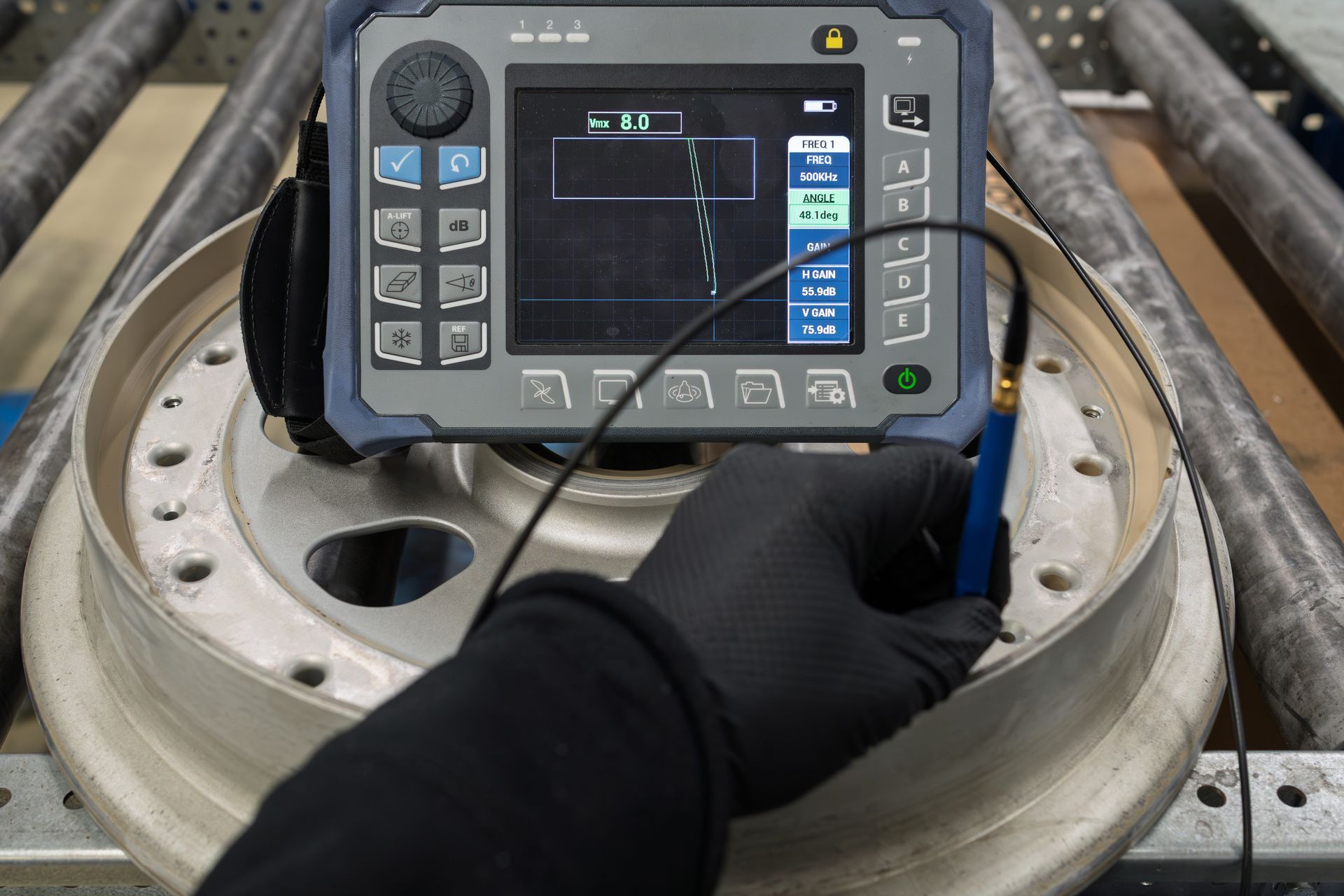
Eddy current testing uses electromagnetic induction to inspect conductive materials. A probe generates an alternating magnetic field, which induces eddy currents in the material being tested.
When there is a defect, such as a crack or corrosion, the flow of eddy currents is disrupted. This change is detected by the equipment and displayed as a signal.
Key advantages of eddy current inspection include:
- No damage to the material being tested
- Immediate results
- High sensitivity to surface and near-surface defects
- Ability to inspect complex shapes
Because of its accuracy and efficiency, this method is widely used across multiple industries.
Modern Uses of Eddy Current Testing
Today, eddy current testing plays a vital role in ensuring safety and quality in critical industries.
Common applications include:
- Aerospace component inspections
- Pipeline and infrastructure testing
- Automotive manufacturing quality control
- Power generation equipment inspection
The ability to detect small defects early helps prevent failures and maintain structural integrity.
Advancements in Eddy Current Technology
Modern eddy current NDT equipment has evolved significantly from its early forms. Digital systems now provide highly detailed data, improved accuracy, and faster inspection speeds.
Recent advancements include:
- Portable testing devices
- Advanced signal processing software
- Automated inspection systems
- Integration with other NDT methods
These innovations continue to expand the capabilities of non-destructive testing services.
Why Eddy Current Testing Remains Essential
The evolution of eddy current testing reflects the ongoing need for safe, efficient, and reliable inspection methods. Its ability to detect flaws without damaging materials makes it an essential tool in industries where safety and precision are critical.
At Steel City NDT, we provide expert non-destructive testing services, including advanced eddy current inspection, to help ensure the safety and reliability of your equipment and infrastructure.
You might also like