
How to Prepare for an NDT Inspection: A Practical Checklist
October 29, 2026
Preparing for a nondestructive testing (NDT) inspection involves more than scheduling a technician. Project documentation, material information, equipment access, and safety requirements all play an important role in making the inspection process efficient.
Whether you are inspecting fabricated welds, industrial equipment, or manufactured components, proper preparation helps minimize avoidable delays and supports accurate, useful inspection results.
At Steel City NDT, we work with businesses throughout Pittsburgh, Pennsylvania, Ohio, West Virginia, and surrounding areas to provide professional inspection services.
Here is what to consider before your next NDT inspection.
What Should You Do Before an NDT Inspection?
Before an NDT inspection, confirm the inspection scope, identify the applicable codes or specifications, provide relevant material and component information, and make sure the inspection area is accessible and safe.
A practical preparation checklist includes:
- Define what needs to be inspected.
- Identify applicable codes and acceptance criteria.
- Gather drawings and supporting documentation.
- Confirm material type and component dimensions.
- Prepare the inspection area.
- Coordinate safety and site access.
- Establish reporting and scheduling expectations.
The exact requirements will depend on the inspection method and project.
1. Define the Inspection Scope
The first step is identifying what needs to be evaluated and why.
For example, a manufacturing facility may need to inspect completed welds before shipment, while a maintenance team may need to evaluate corrosion or cracking in existing equipment.
Before requesting an inspection, determine:
- Which components, welds, or structures require testing
- How many inspection locations are involved
- Whether testing is part of fabrication, maintenance, or final acceptance
- Which discontinuities or conditions are of concern
- Whether the inspection must be completed by a specific deadline
Providing this information helps the inspection provider understand the project and determine what additional details may be needed.
2. Identify Applicable Codes and Inspection Requirements
Inspection requirements are not identical across industries or projects.
The applicable code, specification, or customer requirement may determine which testing methods are permitted, how inspections must be performed, and which acceptance criteria apply.
For welded components, the American Welding Society provides guidance addressing different inspection methods and their applications.
Its Guide for the Nondestructive Examination of Welds is one example of an industry resource that discusses commonly used examination techniques.
Before scheduling testing, gather any available information about:
- Applicable codes and standards
- Project specifications
- Inspection procedures
- Acceptance criteria
- Required inspection coverage
- Personnel qualification requirements
If you are uncertain which requirements apply, discuss the project with your inspection provider before work begins.
3. Gather Drawings and Material Information
Technical documentation helps inspectors understand the components being evaluated.
Depending on the project, useful information may include engineering drawings, weld maps, material specifications, part numbers, and previous inspection records.
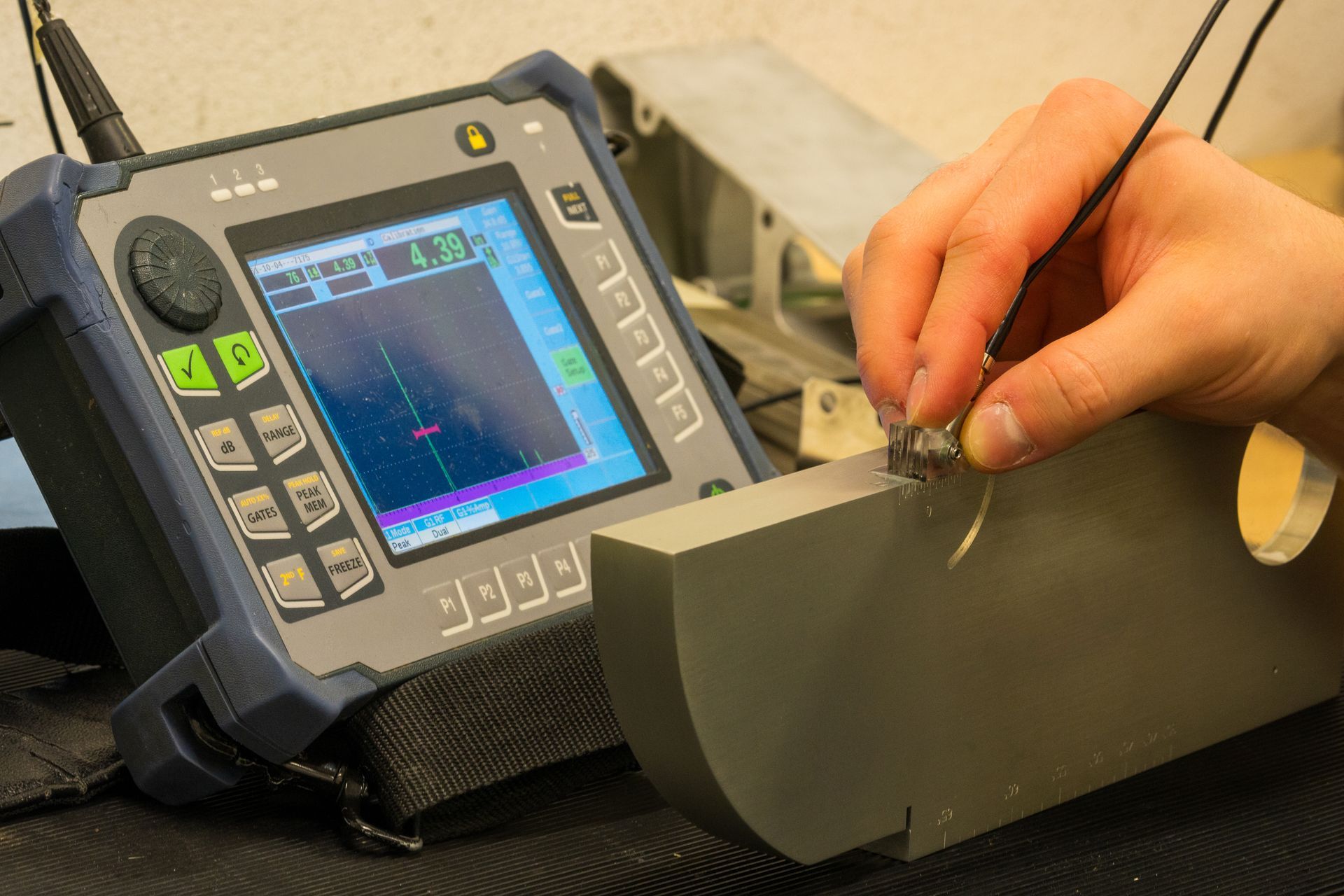
For example, an ultrasonic inspection may require information about material thickness, geometry, and the location of welds or suspected discontinuities.
Material composition can also influence the selection of an appropriate NDT method.
The American Society for Nondestructive Testing explains these differences in its overview of nondestructive testing methods.
Providing accurate documentation in advance helps the inspection team prepare for the specific application.
4. Confirm the Material and Inspection Method
Not every NDT technique is suitable for every material or defect type.
Magnetic particle testing, for example, is used with ferromagnetic materials, while liquid penetrant testing is intended to reveal surface-breaking discontinuities in suitable nonporous materials.
Ultrasonic testing can evaluate certain internal discontinuities and material thicknesses, while radiographic testing produces images of internal features using penetrating radiation.
Understanding the material and inspection objective helps determine which methods may be appropriate.
Steel City NDT offers a range of NDT/NDE inspection services for different industrial applications.
If the required method has not been specified, discuss the component and inspection objectives with the testing team before proceeding.
5. Prepare the Inspection Area and Component Surfaces
Inspection access and surface conditions can affect the effectiveness of testing
.
Depending on the method, surfaces may need to be cleaned or prepared to remove contaminants that interfere with examination.
For example, liquid penetrant testing requires suitable surface conditions so penetrant can enter surface-breaking discontinuities.
ASNT's technical article on liquid penetrant testing explains why surface cleanliness and proper processing are important.
Preparation may involve:
- Removing obstructing materials where required
- Providing access to inspection locations
- Identifying coatings or surface treatments
- Confirming whether equipment can be safely shut down
- Ensuring adequate space for inspection equipment
Do not remove coatings, dismantle equipment, or alter component surfaces without first confirming the applicable inspection requirements and obtaining appropriate authorization.
6. Coordinate Site Access and Safety Requirements
Industrial inspection work may involve active production environments, elevated work areas, confined spaces, or equipment requiring isolation.
Before the inspection team arrives, communicate any relevant site-specific safety requirements.
These may include:
- Facility access and visitor procedures
- Required personal protective equipment
- Equipment isolation or lockout/tagout procedures
- Work permits
- Elevated access arrangements
- Confined-space restrictions
- Other nearby operations that could affect testing
Certain methods, including industrial radiography, require specialized safety controls and coordination.
The inspection provider and facility representatives should establish the necessary arrangements before testing begins.
7. Confirm Scheduling and Reporting Expectations
Inspection planning should also address when testing will occur and what documentation the project requires.
Consider discussing the following details before the scheduled inspection:
- Desired inspection date
- Number of components or inspection locations
- Production or shutdown schedule
- Required report format
- Component identification and traceability
- Applicable acceptance criteria
- Report delivery expectations
Clear communication helps prevent misunderstandings about inspection scope and documentation.
Inspection reports can become important records for quality assurance, maintenance planning, and future evaluations.
What Happens After an NDT Inspection?
Following an inspection, the testing provider documents the examination and reports findings according to the applicable procedure and project requirements.
Depending on the method and scope, the results may identify relevant indications, measurements, or areas requiring further evaluation.
An indication does not automatically mean a component is unacceptable. Findings must be evaluated against the applicable acceptance criteria.
If additional examination or corrective work is required, the project team can use the inspection findings to determine appropriate next steps.
Steel City NDT supports industrial clients with professional testing and documentation to help them make informed decisions about their materials and equipment.
Why Does Proper NDT Preparation Matter?
An organized inspection process can help reduce avoidable disruptions.
When inspection requirements, component information, and site arrangements are established in advance, technicians are better positioned to perform the requested work efficiently.
Preparation also supports:
- Clear communication between project teams and inspectors
- Appropriate selection of testing procedures
- Better access to inspection locations
- More consistent documentation
- Reduced risk of unnecessary scheduling delays
- Improved coordination with manufacturing and maintenance activities
A successful inspection begins with a clearly defined scope and the information needed to perform the work.
Schedule Your NDT Inspection With Steel City NDT
Proper preparation helps your inspection proceed efficiently and provides the foundation for reliable results.
Steel City NDT offers nondestructive testing services for manufacturing, construction, infrastructure, and other industrial applications throughout Pittsburgh and surrounding regions.
Whether you need a single inspection or ongoing testing support, our team can help you understand the information required to get started.
Contact Steel City NDT to discuss your inspection requirements and request a quote.
What documents are needed for an NDT inspection?
Requirements vary, but useful documents may include drawings, material specifications, weld maps, applicable codes, inspection procedures, and previous testing records.
Do components need to be cleaned before nondestructive testing?
Some methods require specific surface conditions. The necessary preparation depends on the material, inspection technique, and procedure. Confirm requirements with the inspection provider before modifying a surface.
How long does an NDT inspection take?
Inspection duration depends on the method, component size, number of inspection locations, site accessibility, and documentation requirements.
Can NDT inspections be performed on-site?
Yes. Steel City NDT provides on-site and laboratory inspection services, depending on project requirements.
Who determines whether an inspected component passes or fails?
Acceptance is determined by applying the relevant code, specification, or agreed acceptance criteria to the inspection findings, within the inspector's authorized scope.
You might also like