
The History of Dye Penetrant Testing
December 15, 2025
Dye penetrant testing is one of the most widely used non destructive testing methods in modern industry. Its ability to detect surface breaking defects on both ferrous and non ferrous materials makes it essential for aerospace, manufacturing, welding, transportation, and structural applications. But the technique did not start with the advanced products used today. Its history spans more than a century, evolving from simple oil and chalk methods into a precise, standardized inspection process. Understanding the origins of dye penetrant testing provides valuable insight into why it remains such a reliable and accessible NDT method.
Early Origins: The Oil and Whiting Method
The earliest form of penetrant inspection began in the late 1800s and early 1900s with a technique known as the oil and whiting method. Mechanics applied oil to the surface of metal parts and then coated the area with chalk or “whiting.” As the oil seeped out of cracks, the chalk absorbed it and revealed defect locations. Though extremely basic, this method established the foundation of modern penetrant processes by demonstrating how fluids can highlight surface flaws.
Development of Fluorescent Penetrants in the 1940s
The next major advancement occurred during World War II. Industries required more reliable ways to detect small surface discontinuities in critical aircraft components. Researchers developed fluorescent penetrants, which glowed under ultraviolet light and offered significantly higher sensitivity than traditional visible dyes.
These early fluorescent dyes marked a turning point in the history of liquid penetrant testing, allowing inspectors to identify smaller cracks and defects that older methods could not detect.
Postwar Expansion and Standardization
Following the war, penetrant testing grew rapidly across multiple industries. By the 1950s and 1960s, manufacturers began offering commercial penetrant systems with standardized cleaners, developers, and dyes. Organizations such as ASNT and ASTM contributed to the development of formal guidelines that ensured consistent and reliable inspection practices.
Standardization helped transform dye penetrant testing into one of the most widely accepted NDT inspection methods for surface flaw detection.
Introduction of Water Washable and Solvent Removable Penetrants
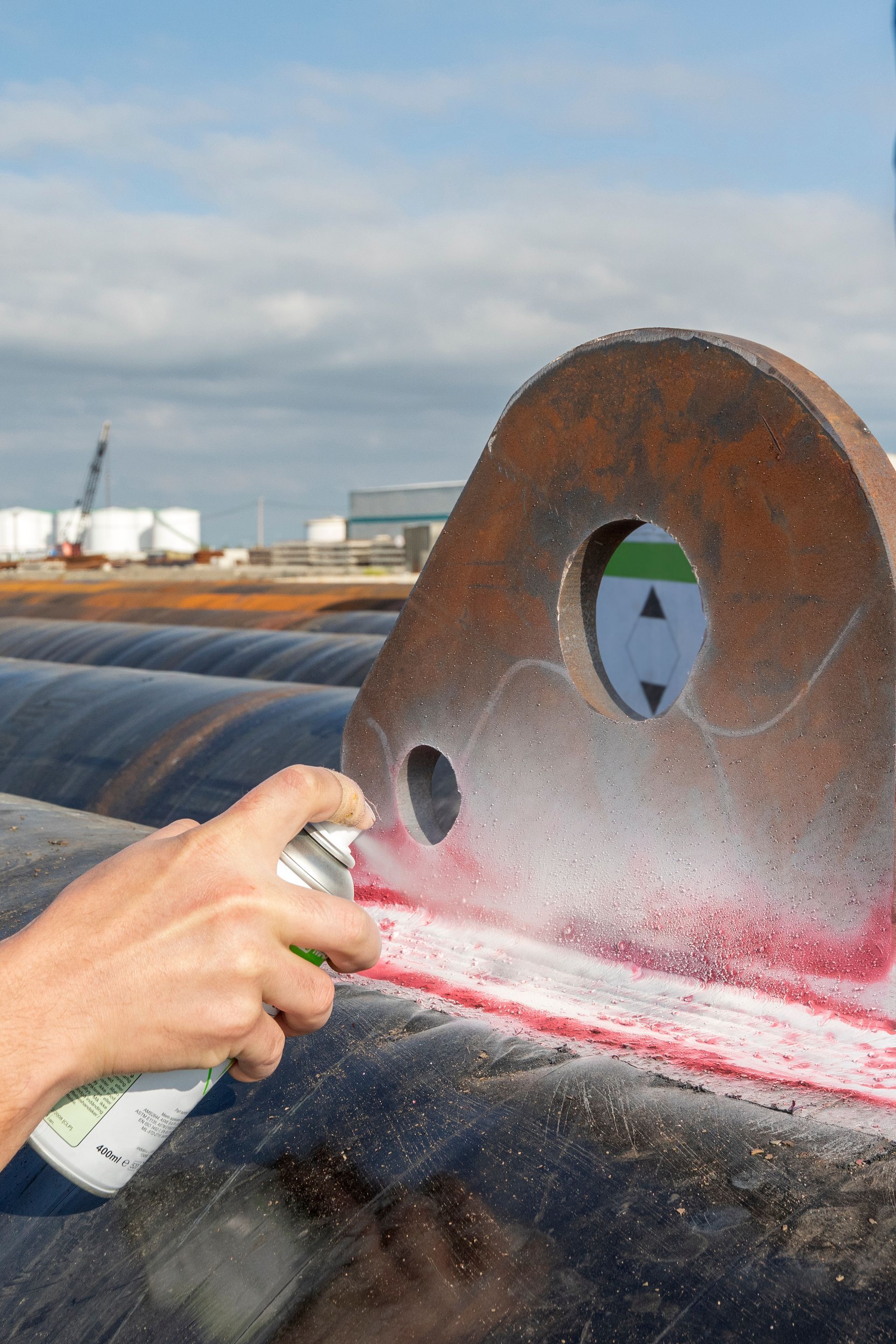
As technology advanced, new formulations improved application and cleanup. Water washable penetrants reduced the need for harsh chemicals, while solvent removable penetrants provided better control in field environments. These innovations made inspections cleaner, safer, and more efficient for technicians.
Modern Fluorescent and Visible Dye Systems
Today’s dye penetrant inspection systems are highly refined. Modern materials offer:
- Increased sensitivity levels
- Better visibility in both fluorescent and visible forms
- Improved safety and environmental compliance
- Enhanced developer formulations for clearer indications
These advancements allow industries to perform consistent, accurate inspections on a broad range of materials.
The method’s versatility is a key reason why penetrant testing remains widely used, even with the rise of digital and automated NDT technologies.
Why Dye Penetrant Testing Is Still Relevant
Despite the growth of ultrasonic, radiographic, and advanced digital inspection systems, penetrant testing continues to be preferred for many applications because it is:
- Cost effective
- Highly sensitive to surface cracks
- Easy to apply in the field
- Suitable for complex shapes
- Quick to perform with minimal equipment
Its simplicity and accuracy make PT a foundational technique in modern nondestructive testing.
Conclusion
The history of dye penetrant testing reflects more than a century of innovation, evolving from simple oil and chalk techniques into a sophisticated, standardized NDT method used worldwide. Its reliability, sensitivity, and versatility ensure it remains an essential tool for quality assurance in many industries. For professional penetrant inspections and comprehensive NDT services, Steel City NDT delivers accuracy and expertise you can trust.
You might also like